Commercial Waste Removal in Edmonton
Commercial waste removal in Edmonton needs to be practical, flexible and suited to the way local businesses actually work. Our service is arranged around regular and one-off collections of non-hazardous commercial waste, with support for offices, shops, hospitality premises, light industrial units and multi-tenant buildings. The aim is straightforward: remove unwanted business waste cleanly, keep it moving through the right channels and help premises stay tidy without unnecessary disruption to trading hours.
We handle mixed commercial waste streams, bulky clearances and scheduled collections for businesses that need a reliable route for unwanted items, packaging and general rubbish. Where items can be reused, recycled or separated, the work is planned with that in mind. Clear sorting matters because it affects how much can be recovered, how quickly a clearance can be completed and what preparation may be needed on site. If you are comparing options, it is sensible to think first about volume, access and the type of waste involved.
A simple way to begin is to gather the main facts about the job and then request a quotation once you know what needs moving. For larger or more varied loads, a short description of the waste and the access conditions is often enough to shape an initial price range. If you want to speak through the practical side first, you can also use the contact details on the site and decide which collection pattern suits the premises best.
Commercial collections for day-to-day business waste
Regular commercial waste collections are useful when a business produces predictable rubbish that builds up through normal operations. That can include office paperwork, cartons, shrink wrap, disposable containers, broken fixtures or general non-confidential waste from shared workspaces. The most practical arrangement is usually one that matches turnover and storage space, rather than leaving waste to accumulate until it becomes awkward to move or store safely.
For many premises, the main choice is between periodic clearances and a recurring collection pattern. Periodic work suits businesses with fluctuating output, while ongoing collections are better where waste is generated week after week. Either way, the focus is on removing rubbish efficiently and avoiding unnecessary handling on site. In the right setting, this can reduce clutter around entrances, stores, basements and loading points, while keeping the work area easier to manage.
When planning a collection, it helps to note three things clearly: what the waste is, how much there is and where it is stored. Those details make it easier to judge whether the job is straightforward or whether extra labour, vehicle capacity or access time will be involved. If you need a quick next step, contact us to discuss the waste and arrange a quotation that reflects the actual load.
Office and workplace clearances
Office waste removal often involves more than a few bin bags. Workplaces can generate old desks, chairs, shelving, filing materials, packaging, redundant IT items and general clutter left behind after a move, refit or consolidation. A structured clearance is useful because different materials may need different handling, and because offices often have narrow corridors, lifts, reception areas and shared entrances that make moving items less straightforward than it first appears.
For occupied offices, the best approach is usually a clearance that respects the building and the working day. That can mean separating light recyclable waste from heavier items, identifying anything that needs special handling, and planning removal so it does not interfere with staff, visitors or neighbouring units. Good access planning is often as important as lifting capacity, especially in upper floors or busy buildings where equipment and routes need to be managed carefully.
Workplace clearances are also useful when businesses are changing layout rather than relocating completely. Removing unused furniture, archive boxes and redundant fixtures can open up circulation space and simplify future cleaning and maintenance. For many customers, the decision point is less about whether the waste can be removed and more about how to remove it with the least interruption. A quotation request can be based on photos, a rough inventory or a simple description of the rooms involved.
Bulky furniture, fittings and office items
Many business clearances include large items that are awkward to move through standard exits. Desks, cabinets, meeting tables, reception counters, seating and storage units all take planning because of size, weight and finish. The same applies to display fixtures or counter units that have been built into a room and may need careful dismantling before removal. Where furniture is reusable, disposal routes are often simpler when items are separated by type and condition.
Choosing the right service for bulky furniture depends on whether the items are part of a wider clearance or a standalone removal. If a premises is stripping out a room, the main issue may be safe extraction and efficient loading. If the job is just a few large pieces, the focus is usually on timing, access and avoiding damage to walls, floors and door frames. A prepared route and clear working space can make the process much smoother for everyone involved.
Useful preparations are limited, but they are worth doing well:
- identify the largest items and their locations
- check whether stairs, lifts or narrow doors are involved
- separate anything that must stay on site
- note if the premises has restricted parking or loading access
Retail, hospitality and customer-facing premises
Retail and hospitality businesses often need waste removal that can deal with packaging, broken stock, display materials, used fixtures and surplus consumables without getting in the way of trading. The challenge is not only volume, but also the layout of the premises and the rhythm of the working day. Clearances need to be workable in back-of-house storage areas, stockrooms, cellars, kitchens or service corridors where space is often at a premium.
For these settings, the strongest value usually comes from keeping waste moving out of the way at sensible intervals. That helps reduce congestion behind the scenes and makes it easier to store fresh stock, handle deliveries and maintain basic order in cramped working areas. When a premises is preparing for an upgrade, stock change or seasonal reset, a focused waste collection can also remove old displays and packaging in one pass rather than stretching the work across several days.
Timing and access matter here more than in many other settings. If waste is held in a rear yard, basement or service room, it is useful to know whether the items can be carried directly out or whether they need moving through customer areas. A quotation is easier to shape when the business knows which parts of the premises are involved and whether any equipment must stay live during the clearance.
About Edmonton
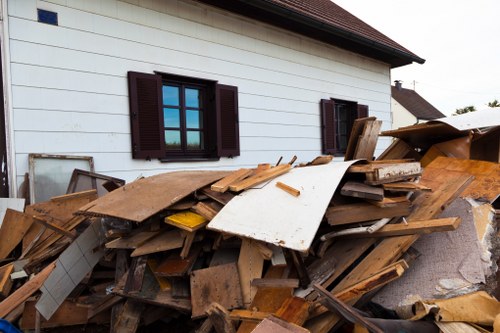
Edmonton is a district in the north of London, in the London Borough of Enfield, and its character has been shaped by layers of suburban growth, older settlement and the transport corridors that pass through the area. The River Lea and its associated waterways form one of the most recognisable physical features of the wider district, with open spaces, towpaths and stretches of industrial and residential landscape sitting side by side. Edmonton’s history reaches back well before modern development, and over time the area changed from a place of rural communities and country houses into a built-up part of the capital with terraced streets, estates and commercial frontages. Several older buildings and churches still provide reminders of earlier periods, while later twentieth-century development added housing, retail parks and service roads that altered the local pattern of movement. The area is also associated with Pymmes Park, a substantial public open space with lakes, paths and mature trees, and with the nearby network of parks and playing fields that give the district pockets of greenery within a dense urban setting. Local high streets and shopping parades contribute to a lived-in, practical atmosphere, while the rail and road links connect Edmonton to neighbouring parts of north London and beyond. The mix of housing, river edges, open space and busy thoroughfares gives the area a layered identity that is both ordinary and historically grounded, with everyday life continuing among places that reflect different stages of London’s long expansion.
Flat clearances and shared-property work
Flat clearances tend to be more detailed than many ground-floor jobs because of stairs, lifts, shared entrances, limited parking and neighbours using the same access points. The items themselves may be modest in size, but the route out of the building can influence the pace of the work as much as the amount of waste. Furniture, white goods, mixed household items and unwanted general rubbish all need to be assessed against the building layout and any rules governing access.
For landlords, letting agents and property managers, a flat clearance can be the practical end of a tenancy, a pre-sale tidy-up or part of refurbishing a vacant unit. In each case, the goal is to remove what is left behind while keeping the property safe and ready for the next stage. Where the job includes a mixture of furniture and smaller items, sorting beforehand can help distinguish what is to be removed, what is staying and what should be handled separately.
If a flat is furnished, partly cleared or heavily cluttered, it is useful to know whether the removal needs to be done all at once or in stages. That decision affects how much labour and time will be required, especially in buildings where corridors must remain clear. A concise description, a few photographs or a simple inventory is often enough to produce a meaningful quotation without creating unnecessary back-and-forth.
Building waste and refurbishment debris
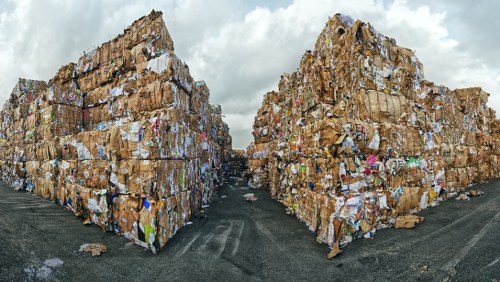
Builders’ waste removal covers the kind of material left behind after light refurbishment, strip-out work or small-scale site changes. That can include plasterboard, timber offcuts, packaging, broken fittings, old fixtures and mixed debris from domestic or commercial work. The main issue is usually not just quantity, but whether the waste contains mixed materials that need separating before removal or recovery.
Refurbishment waste is best handled with a clear idea of what has come off the site and what remains in place. Jobs are easier when loose waste is collected into a single area and anything sharp, heavy or dusty is identified in advance. On smaller sites, the clearance may be completed in one visit; on larger premises, the work may need to be staged so that it fits around ongoing trades or avoids blocking access routes for other contractors.
Price and method are usually influenced by access, labour, load size and the mixture of materials. Brick fragments, timber, plasterboard and metal all behave differently in handling and loading, so a straightforward estimate benefits from accuracy at the start. Where a project produces multiple waste types, it is often better to describe them plainly rather than use a general label. That helps shape a quotation that matches the real scope of the work.
Food waste, appliances and mixed disposal
Some commercial premises need occasional removal of appliances or other bulky equipment as part of a broader clearance. Fridges, freezers, preparation units, shelving, display appliances and similar items can become awkward when a site is being reorganised, closed or stripped back. These items may need lifting support, careful routing and a clear understanding of which pieces are being removed together.
In business settings, appliance removal is often tied to changes in layout or operations rather than isolated disposal. A hospitality site might need old equipment taken away before new stock arrives, while an office kitchen or staff room may need outdated units removed to make space. In either case, the work benefits from separating appliances from general rubbish so that the load can be handled efficiently and the remaining waste stream is easier to organise.
Where mixed disposal is involved, it is sensible to say whether the job includes bulky appliances, loose commercial waste or both. That distinction can affect the vehicle size, loading sequence and the time needed on site. If you want to keep the process simple, send the main details and ask for a quotation based on the items that need to go rather than on a broad description alone.
Hazard awareness, sorting and responsible handling
Not every waste job is suitable for ordinary mixed collection, and that is why clear description matters. Some materials require different treatment because they may be subject to specific disposal rules, and others simply work better when separated from general rubbish. Even where a premises mostly needs standard commercial waste removal, it is worth identifying anything unusual before the job is booked so the right approach can be planned.
Responsible handling starts with sorting. Waste that has been separated by type is easier to assess, easier to load and easier to route through the right disposal channel. That can include keeping recyclable materials apart from general waste, separating clean packaging from contaminated items and identifying anything that should not be placed with a routine clearance. The practical benefit is a calmer, more efficient job on the day.
When you are unsure whether a specific item belongs in the clearance, it is better to mention it early than to leave it hidden in a mixed pile. That allows the work to be planned honestly and avoids last-minute complications at collection time. For anything unusual, a short description is more helpful than guessing. If necessary, ask for a quotation and note the item type clearly so the next step is based on what is actually present.
Planning a quotation and preparing access

Quotations for commercial waste removal are shaped by the practical details of the job rather than by a single fixed pattern. The volume of waste, the type of items, the distance they need to be carried and the ease of access all affect the final arrangement. A simple business clearance may need little more than a photograph and a brief description, while a larger office, shop or refurbishment load may benefit from a fuller inventory so the work can be quoted accurately.
It also helps to say whether the waste is ready at ground level, upstairs, in a rear yard or spread through several rooms. That allows the collection to be planned around labour and access rather than around assumptions. If the premises has a lift, loading bay, narrow stairwell or restricted parking, those details should be included at the outset. Accurate information is the fastest route to a sensible estimate because it reduces the need for back-and-forth and keeps the quote tied to the actual job.
For a straightforward start, prepare these points before you enquire:
- the main type of commercial waste or bulky item
- the approximate quantity or number of items
- the floor level and access route
- whether anything needs separate handling
Why businesses choose a structured clearance approach
A structured approach to waste removal is useful because it treats the job as more than simple lifting. Commercial premises often produce mixed loads, awkward routes and time pressures that need a practical plan. By identifying the waste type, separating what can be handled together and scheduling the work around the site, the clearance becomes more predictable and the premises easier to keep in order.
That approach also supports better decision-making when a business has several items or waste streams to deal with at once. Rather than treating everything as one mass, it is possible to think about what is bulky, what is recyclable, what needs special attention and what can be removed together. In many cases, that leads to a clearer and more useful service because the quotation reflects the real combination of items instead of an estimate based on guesswork.
If you are weighing up options for commercial waste removal in Edmonton, the simplest route is usually the best one: describe the waste honestly, note the access points and ask for a quotation that matches the premises. You can keep it brief or detailed, depending on the size of the job. When you are ready, make the enquiry and let the removal be arranged around the facts of the site rather than around assumptions.